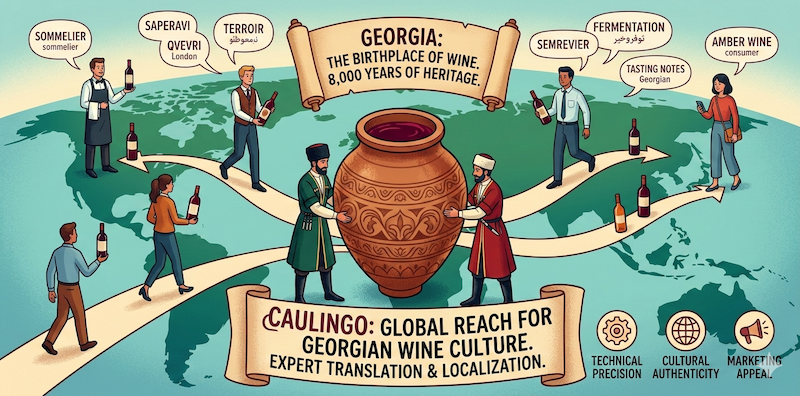
Georgia is widely recognised as the birthplace of wine. Archaeological evidence shows that winemaking in the region dates back more than 8,000 years, making Georgian wine culture one of the oldest on Earth.
Today, Georgian wines are reaching global audiences. Export markets are expanding, wine tourism is booming, and international media is increasingly discovering the unique traditions of Georgian viticulture.
But telling this story to the world requires more than simple translation.
Wine is science, culture, history, and sensory experience combined. Communicating it across languages demands specialists who understand both the language and the wine industry.
At Caulingo, we help wineries, exporters, and wine organisations present Georgian wine with clarity, authenticity, and global appeal.
Wine language is highly specialised. It includes technical terminology related to:
A literal translation often fails because wine vocabulary carries precise industry meanings and cultural context.
For example, descriptions of fermentation techniques or tasting notes must match the terminology used by sommeliers, distributors, and wine professionals in the target language.
Professional wine translators need real knowledge of:
This combination ensures translations are technically accurate and commercially effective.
Georgian winemaking includes traditional concepts that must be translated carefully to preserve their meaning internationally.
ქვევრი (Qvevri)
Traditional clay vessel buried underground for fermenting and ageing wine.
მარანი (Marani)
A traditional Georgian wine cellar where qvevri are stored.
ქარვისფერი ღვინო
Amber wine — white wine fermented with skins using traditional Georgian methods.
ჭაჭა (Chacha)
A distilled spirit produced from grape pomace.
საფერავი (Saperavi)
An indigenous Georgian red grape variety known for deep colour and structure.
რქაწითელი (Rkatsiteli)
One of the most widely cultivated Georgian white grape varieties.
მწვანე (Mtsvane)
An aromatic Georgian white grape often used in blends or varietal wines.
Correct translation of these terms ensures Georgian wines are understood within the global vocabulary of the wine industry.
Wine businesses produce a wide range of multilingual materials. Common projects include:
Each format requires a different balance of technical precision, storytelling, and marketing language.
Translation transfers meaning.
Localisation adapts the message for a specific market.
In the wine industry, localisation may involve:
Effective localisation helps wineries connect with consumers in different markets while maintaining brand identity.
Wine is also a highly social industry. International trade events require clear, professional communication.
Caulingo provides interpretation services for:
Our interpreters understand both the language and the industry, enabling smooth communication between producers, buyers, and media.
The global wine market is competitive. Professional multilingual communication helps wineries present their products with credibility and confidence.
Expert translation allows wine producers to:
At Caulingo, we combine linguistic expertise with real knowledge of the wine sector to help Georgian wine speak the language of the global market.
Wine texts include technical terminology and industry-specific vocabulary that require subject-matter knowledge in addition to linguistic expertise.
English dominates international wine trade, but many wineries also require Russian, German, French, Chinese, and other export-market languages.
Common clients include wineries, exporters, distributors, tourism organisations, regulatory bodies, and wine industry associations.
Great wine deserves great communication.
At Caulingo, we provide professional translation, localisation, and interpretation services tailored to the wine industry.
If you are expanding into international markets or organising a wine event, our team is ready to help.